


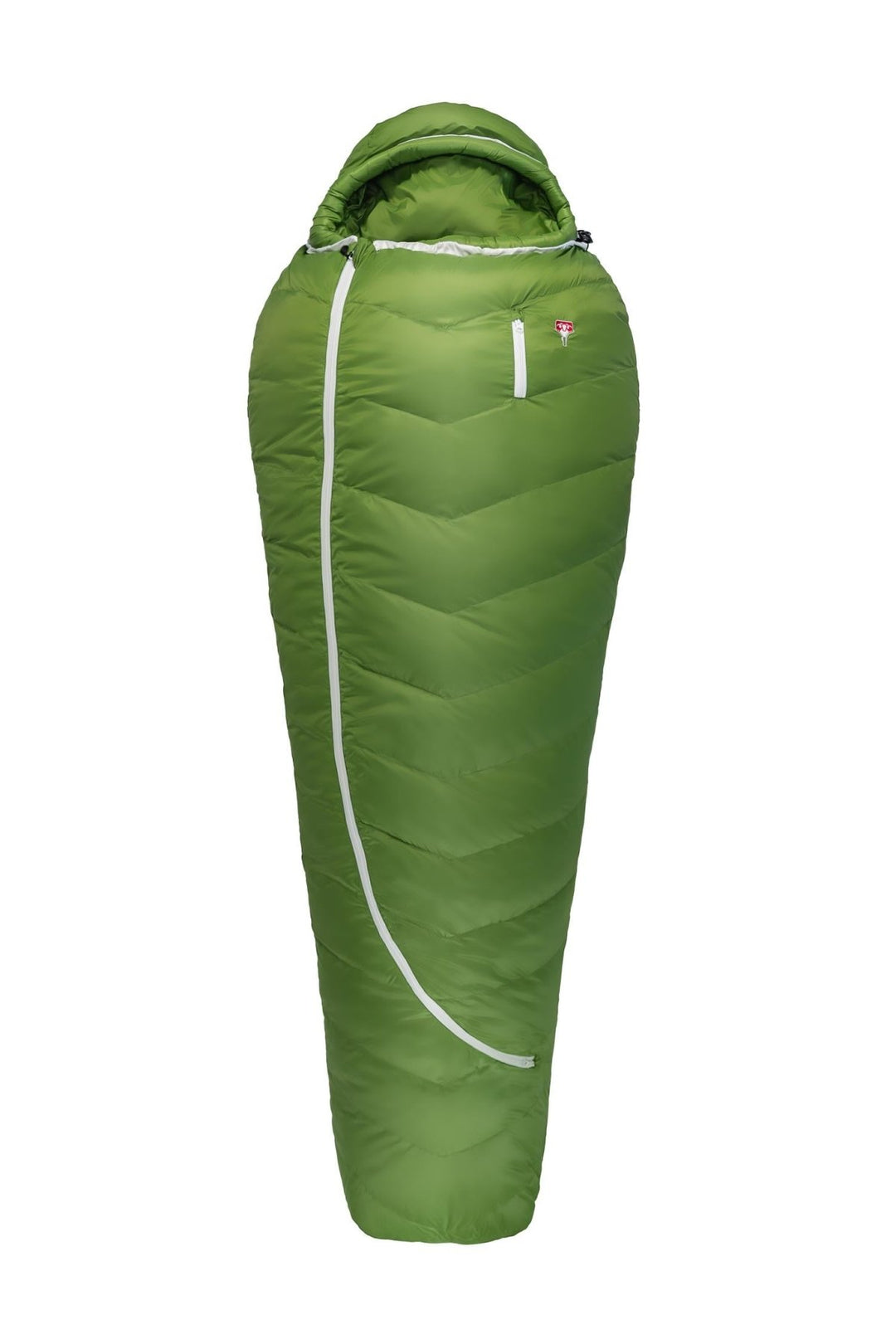


Sleeping bags with a small pack size, more space for your tour
When space in a backpack or pannier is limited, it's not just the weight that matters. The packed size of the sleeping bag also determines how much room remains for clothing, food, and other equipment.
A compact sleeping bag is therefore particularly interesting for trekking, bikepacking, hut tours, travel and tours with little storage space.
It's important to remember: the smallest pack size alone doesn't make it the right sleeping bag. Temperature range, size, and comfort level must still be suitable for your trip.
What does "small pack size" mean for a sleeping bag?
The packed size describes how much space a sleeping bag needs when compressed.
The more the insulation and materials can be compressed, the smaller the sleeping bag can be packed for transport.
Insulations dominated by down offer particular advantages here, because down can build up a high loft and at the same time be highly compressed.
Grüezi bag® therefore uses DownWool® 2.0 in many of its compact models . This insulation combines 70% down with 30% wool: the down provides high loft with low weight and a small pack size, while the wool supports moisture and temperature management.
Learn more about DownWool® 2.0 →
Small pack size or low weight – what's the difference?
The two properties are often related, but are not the same.
Small pack size
A small pack size means that the sleeping bag takes up little space in your luggage . This is particularly important when storage space is limited, for example when bikepacking or in a small trekking backpack.
Low weight
A lightweight sleeping bag, on the other hand, reduces the weight you have to carry throughout the entire tour.
If every gram counts for you, you'll find a separate selection for that:
View ultralight sleeping bags →
What is more important?
It depends on your tour. Bikepacking often places a particularly limited amount of available storage space. On long trekking tours, on the other hand, both pack size and weight play a major role.
Therefore, you should consider both values together.
What should you look for in a compact sleeping bag?
1. Temperature range first
A small stuff sack looks practical, but it should never be more important than adequate thermal performance.
Therefore, first choose a sleeping bag whose temperature range matches the expected conditions. For standard-tested adult sleeping bags, the comfort temperature is particularly important for your personal selection.
Understanding sleeping bag temperatures correctly →
2. Pay attention to the actual packing volume
The compressed pack volume can differ between two sleeping bags of similar weight.
If storage space is particularly important for your tour, it is therefore worth taking a look at the specified dimensions or packing volume of the respective model, in addition to the weight.
3. Choose the right sleeping bag size
A shorter or narrower sleeping bag may require less material, but it should still fit your body.
If a sleeping bag is too tight, your body can compress the insulation at your shoulders, knees, or feet. If it's unnecessarily large, more of the interior needs to be heated.
Therefore, don't just choose the smallest size, but the size that fits your height and build.
Finding the right sleeping bag size →
For which tours is a small pack size particularly important?
bikepacking
There is limited space available on the handlebars, frame, and saddlebag. A compactly packable sleeping bag leaves more room for clothing, tools, and other equipment.
Discover bikepacking sleeping bags →
Trekking and long-distance hiking
When trekking, you have to fit your sleeping bag, sleeping mat, clothing, food and other equipment into a limited backpack volume.
A compact sleeping system helps to keep luggage organized while still leaving enough space for necessary equipment.
Hut tours and trips
A sleeping bag that can be packed down small is also convenient on hut tours or trips, especially if you are traveling with a smaller backpack or frequently change location.
Which sleeping bag can be packed down to a particularly small size?
Particularly compact sleeping bags are often found in models with high-quality down or DownWool® insulation.
One example is the DownWool® 2.0 Extreme Light . In size Regular, the current model weighs approximately 450 g and has a compressed pack volume of about 2,5 liters.
It is suitable for warm conditions and is particularly interesting when both packing volume and weight need to be kept as low as possible.
For lower temperatures, you should choose a correspondingly warmer model, even if it requires more space in your luggage.
Why the smallest sleeping bag isn't automatically the best
A tiny sleeping bag is appealing when packing. At night, however, other things matter.
A good sleeping bag must:
- to match the expected temperatures,
- provide enough space for your sleeping position,
- to fit your height
- be suitable for the intended use.
Pack size is therefore an important selection criterion, but always only in conjunction with temperature, weight, size and comfort.
The most sensible choice is not automatically the sleeping bag with the smallest stuff sack, but the most compact sleeping bag.
